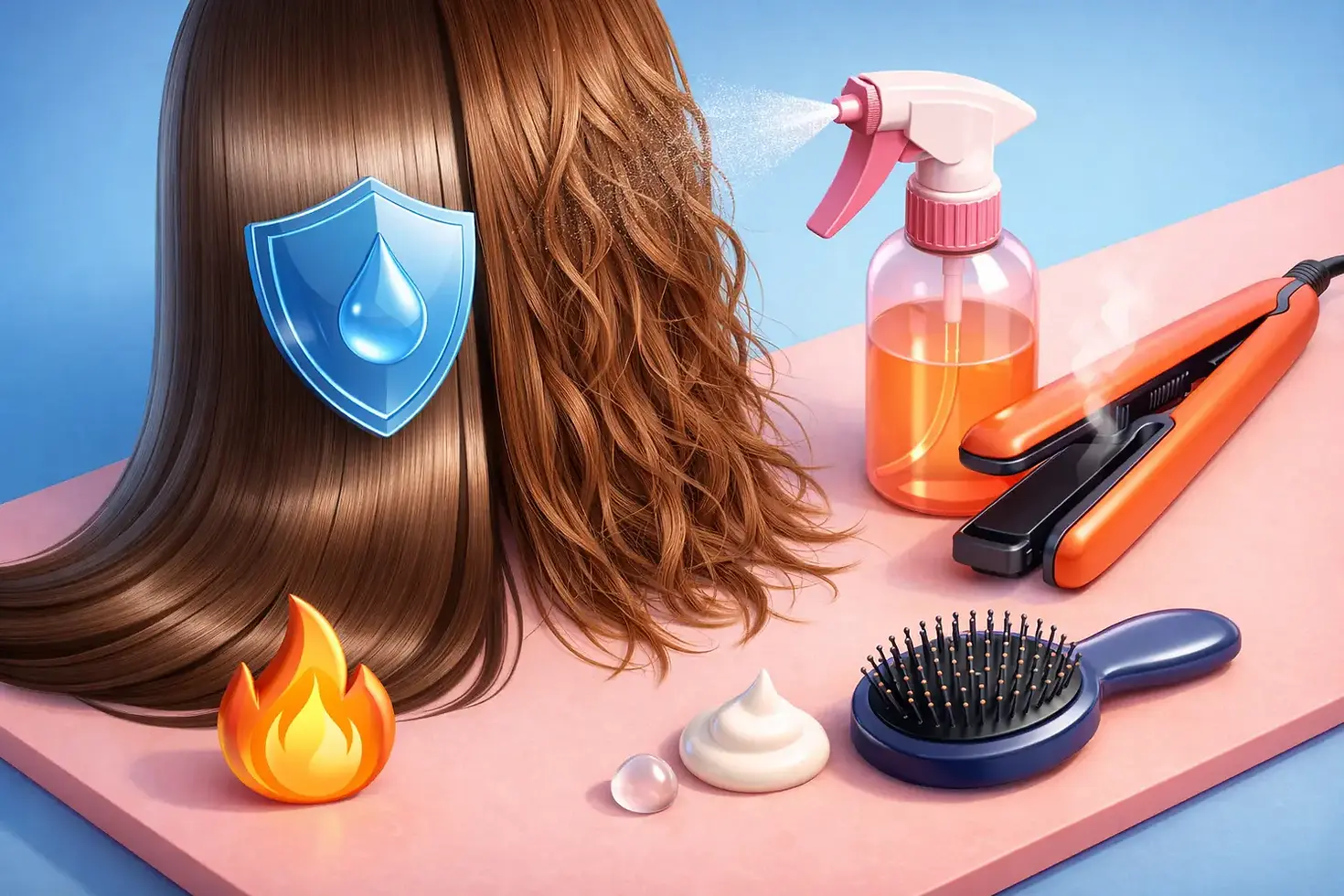
Do I Need Heat Protectant? Yes, Usually
That split-second sizzle when a flat iron hits dry ends is your answer. If you’ve ever asked, do I need heat protectant, and you use a blow dryer, curling iron, flat iron, or hot brush with any regularity, the honest answer is probably yes.
Heat styling can absolutely make hair look polished, smooth, and expensive. It can also quietly wear down your strands over time, especially if your hair is color-treated, dry, fine, frizz-prone, or already showing signs of damage. A heat protectant is not a magic shield that makes high heat harmless, but it is one of the simplest ways to reduce stress on your hair and keep your style from costing you shine, softness, and strength.
Do I Need Heat Protectant for Every Heat Tool?
In most cases, yes. Blow dryers, flat irons, curling irons, wands, and hot brushes all expose hair to temperatures that can weaken the cuticle and dry the hair out. The amount of damage depends on the tool, the temperature, how often you style, and your hair’s condition before you even plug anything in.
Blow drying on medium heat is generally less aggressive than pressing the same section with a 450-degree flat iron. But less aggressive does not mean harmless. Repeated heat exposure can still leave hair rougher, duller, and more prone to breakage. If your goal is healthy, shiny, manageable hair, heat protectant should be part of the routine, not an afterthought.
The only time you may not need one is when you are truly air-drying and not using any heated tool at all. If there is heat involved, there should be protection involved.
What Heat Protectant Actually Does
A good heat protectant helps by creating a lightweight barrier between the hair fiber and the heat source. It can also help smooth the cuticle, improve slip, reduce moisture loss, and make heat styling more even so you are less likely to overwork one section again and again.
That matters because damage rarely shows up all at once. It usually starts as little changes you can feel before you can fully see them. Hair takes longer to dry. Ends feel rough. Your style looks puffier instead of smoother. Shine starts fading. Then come split ends, snapping, and that fried texture no one wants.
Heat protectant helps slow that slide. It does not give you permission to crank every tool to the highest setting and go over the same strand six times. It does help lower the risk, preserve softness, and support better results from the styling you are already doing.
Why Some Hair Needs It Even More
If your hair is healthy and rarely sees heat, you might get away with skipping protectant once or twice without dramatic fallout. But many people are not starting with untouched, perfectly resilient hair.
Color-treated hair tends to be more vulnerable because chemical processing can weaken the outer layer of the hair. Dry or damaged hair already struggles to hold onto moisture, and heat can push it further in the wrong direction. Fine hair can be especially delicate, while coarse or textured hair may tolerate heat differently but still benefit from cuticle smoothing and moisture support.
Frizzy hair is another big one. A lot of people use heat to fight frizz, but unprotected heat can make the hair more dehydrated and rough over time, which often feeds the exact problem you are trying to fix. Protection is what helps styling stay in the lane of polish instead of turning into long-term stress.
Signs You Should Stop Skipping It
If you are still wondering whether heat protectant is really necessary for you, look at your hair honestly after styling and again a few weeks later. Hair usually gives clear signals.
If your ends feel crisp, if your color looks dull faster than it should, if your hair tangles more easily, or if your smooth style lasts one day but your dryness lasts all week, that is not random. It is often a sign that your hair is not handling heat as well as you think.
Another clue is needing more and more heat to get the same result. When hair becomes compromised, it often stops responding beautifully to styling. Then people turn the temperature up higher, which only makes the cycle worse.
Is Heat Protectant Still Necessary if My Tool Has Settings?
Yes. Adjustable settings are helpful, but they do not replace protection. They simply give you more control.
Using the lowest effective heat setting is smart. So is choosing a quality tool that heats evenly. But even a well-made tool on a reasonable temperature is still direct heat on hair. Protectant works with your tool settings, not instead of them.
Think of it this way: lower heat plus a protectant is strategic. High heat with no protectant is a gamble. And for most people trying to keep hair healthy, shiny, and manageable, that is not a great trade.
How to Use Heat Protectant the Right Way
Application matters more than people realize. If you spray one quick mist over the top layer of your hair and assume the job is done, you are probably leaving a lot of your strands exposed.
For blow drying, apply your heat protectant to damp hair before drying. Work it through from mid-lengths to ends first, then use what is left closer to the roots if needed. Comb it through so the product is distributed evenly. Uneven application can mean uneven protection.
For flat irons or curling tools, your hair should be fully dry before the heat touches it unless the tool is specifically designed for damp styling. Hair is most vulnerable when it is wet. If your protectant is meant for dry styling too, apply lightly and evenly, then let it settle before going in with the tool.
More product is not always better. Too much can weigh the hair down or make it feel coated. Too little leaves gaps. The goal is enough to cover the hair consistently without turning the style limp.
What to Look for in a Heat Protectant
The best formula is the one you will actually use every time you style. That means it needs to fit your hair type and the finish you want.
If your hair is fine, go for something lightweight that will not flatten volume. If your hair is dry, damaged, or frizz-prone, you may want a formula that also adds softness and smoothness. If you blow-dry often, look for protection that supports faster, sleeker styling. If you use hot tools after drying, make sure the product is designed for that kind of heat exposure.
This is where salon-quality formulas earn their keep. You want clean, performance-driven protection that does more than just sit on the hair. The best options help defend against heat while improving the way your hair looks and feels after styling. That is the standard at NUK Beauty: haircare that actually works, not another bottle that sounds good and disappears the second you need results.
The Biggest Mistakes People Make
The first mistake is assuming heat damage only happens at extreme temperatures. It does not. Repeated moderate heat can add up.
The second is using protectant only when flat ironing and skipping it for blow drying. Blow dryers absolutely count.
The third is relying on oils alone. Some hair oils can add shine and softness, but not every oil is a true heat protectant. If the product does not specifically say it protects against heat, do not assume it covers the job.
The fourth is using high heat because your hair feels healthy now. Healthy hair is exactly what you are trying to keep.
So, Do I Need Heat Protectant if I Only Style Once in a While?
Even occasional heat styling can cause stress, especially if your hair is already processed or fragile. The risk is lower if you use heat once a month instead of every day, but lower risk is not zero risk.
The better question is this: if it takes a few seconds to apply a product that helps preserve your hair’s shine, softness, and strength, why skip it? For most people, the effort is tiny compared to the upside.
Heat styling is not the enemy. Done well, it is one of the fastest ways to get smoothness, bend, volume, and polish. But great hair is not just about how it looks ten minutes after styling. It is about how it holds up over time.
If you use heat, protect your hair like you plan to keep it.


Comments